Self-Lubricating Bushings
2026-01-15
1. Introduction
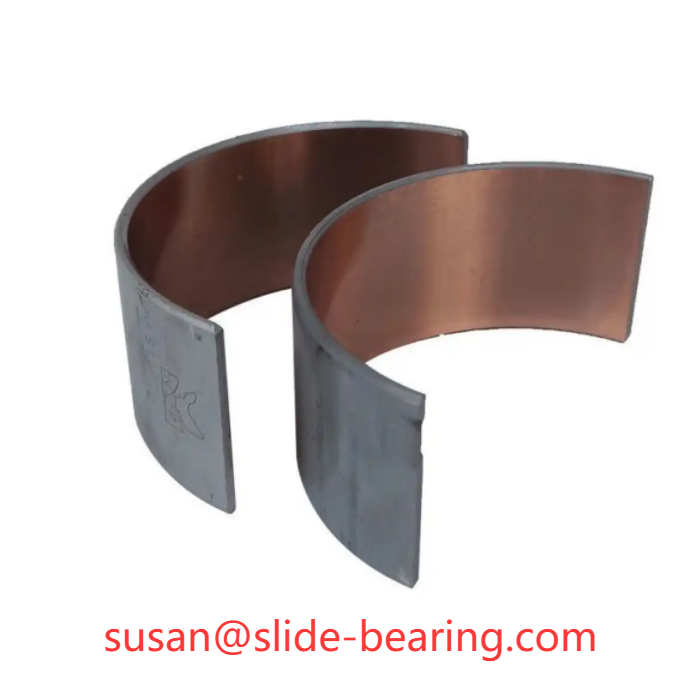
Self-lubricating bushings are advanced bearing components designed to operate without external lubrication systems. By embedding solid lubricants (e.g., graphite, PTFE) into metal matrices, they reduce friction, minimize maintenance, and enhance durability in harsh environments. These bushings are critical in industries requiring high reliability and minimal downtime, such as automotive, heavy machinery, and renewable energy systems
2. Material Composition & Design
a. Base Materials
· High-Strength Brass Alloys: CuZn25Al5Mn4Fe3 (high-lead brass) offers superior wear resistance (HB > 200) and compressive strength (>600 MPa), ideal for high-load applications
· Composite Structures: Copper or bronze matrices embedded with graphite, PTFE, or MoS₂ provide self-lubricating properties
b. Lubrication Mechanisms
· Solid Lubricant Release: Graphite or PTFE particles gradually transfer to the contact surface during motion, forming a protective film
· Oil-Impregnated Pores: Sintered metal bushings retain lubricants in micro-pores, enabling sustained release via thermal expansion
Key Parameters
|
Property
|
Typical Value
|
|
Friction Coefficient
|
0.07–0.15 (dry conditions)
|
|
PV Limit
|
200 N/mm²·m/min
|
|
Temperature Range
|
-50°C to +300°C (intermittent)
|
3. Manufacturing Processes
· Cold Rolling: Copper alloy strips (e.g., CuSn8) are shaped into cylindrical bushings with overlapping seams for structural integrity
· Powder Metallurgy: Sintering brass/copper powders with lubricant additives creates porous, oil-retentive structures
· Surface Treatments: PTFE coatings or nickel plating enhance corrosion resistance in marine environments45.
4. Performance Advantages
00001. Maintenance Reduction
· Eliminate routine lubrication, reducing operational costs by ~30% in industrial machinery58.
00002. Environmental Adaptability
· Function reliably in extreme temperatures (-50°C to +180°C) and corrosive media (e.g., seawater, acids)
00003. Load Capacity
· Static load ratings up to 120 N/mm², outperforming traditional sintered bronze bushings35.
5. Industrial Applications
|
Sector
|
Use Case
|
Benefit
|
|
Construction
|
Excavator pivot joints
|
Shock absorption, high load
|
|
Marine
|
Propeller shaft sleeves
|
Saltwater corrosion resistance
|
|
Automotive
|
EV suspension linkages
|
Lightweight, low maintenance
|
|
Medical Equipment
|
Robotic joint actuators
|
Cleanroom compatibility
|
6. Emerging Trends (2025)
00001. Lightweighting: Aluminum-brass composites (e.g., C6782) for electric vehicles to reduce component mass3.
00002. Smart Monitoring: IoT-enabled bushings with embedded wear sensors for predictive maintenance8.
00003. Eco-Friendly Lubricants: Bio-based solid lubricants (e.g., cellulose-PTFE blends) to meet sustainability standards7.
7. Conclusion
Self-lubricating bushings combine material innovation and advanced manufacturing to address modern industrial challenges. With applications expanding into robotics and renewable energy, future developments will prioritize longevity, smart integration, and environmental compatibility
Welcome to inquiry with us if you are required bushings.
Contact: Susan Shi
Wechat/whatsapp: +8613517489983




 (Chat Online)
-connecting-rod-bearing.png)