The difference between sliding bearings and rolling bearings
2026-01-22
Rolling bearings use ball bearings (ball bearings) or cylindrical rollers (roller or "needle roller" bearings). These elements are contained in the bearing ring or "ring", where they facilitate movement with almost no sliding resistance. Ball bearings are the most common type and can withstand radial and axial loads.
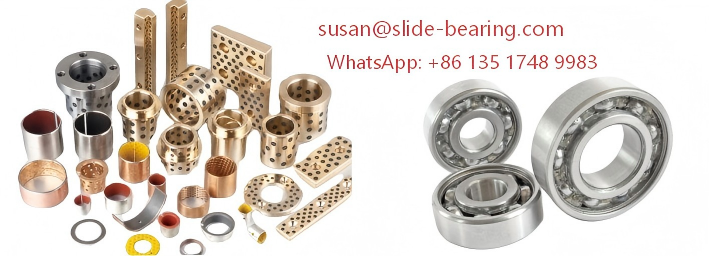
However, rolling bearings can be affected by failure modes such as load failure, where the race is deformed by the rolling elements due to the load, or the ball is deformed if it is overloaded. Due to repeated loads and wear under static conditions, false hormone damage can occur, resulting in oscillatory motion due to insufficient lubrication. Cylindrical roller bearings are designed to withstand heavier loads, with greater contact with the raceway, thereby dispersing the load over a larger area. However, they are not suitable for applications involving thrust loads.
There are differences between sliding bearings and rolling bearings.
Due to its complex multi-component design, precise structure, and precise installation, rolling bearings are often much more expensive than ordinary bearings.
Rolling bearings are more suitable for applications that require precise shaft positioning and/or extremely low friction. Sliding bearings have higher load capacity and can resist high impact loads and edge loads due to their larger contact area and adaptability.
Sliding bearings compensate for misalignment better than some rolling bearings to reduce the impact of edge loads.
The ultra-thin integrated design of sliding bearings can reduce the size of the housing, thereby saving a lot of space and reducing weight.
Sliding bearings have greater resistance to damage caused by oscillatory motion, thereby extending the lifespan of the bearings.
Sliding bearings operate at high speeds and low loads without wear and damage due to rolling element slippage, and have excellent damping performance.
Sliding bearings do not have internal moving parts, so compared to rolling bearings, they operate more quietly under a properly lubricated system and have almost unlimited rated speed.
Compared to rolling bearings, installing sliding bearings directly into a simple casing almost eliminates assembly damage.
Compared with standard rolling bearings, non-metallic sliding bearings have higher corrosion resistance.
Sliding bearings can operate with dry friction, eliminating the need for lubricants during lubrication, maintenance, and additional costs associated with equipment shutdown.
Sliding bearings can operate dry under high temperature and contaminated conditions.
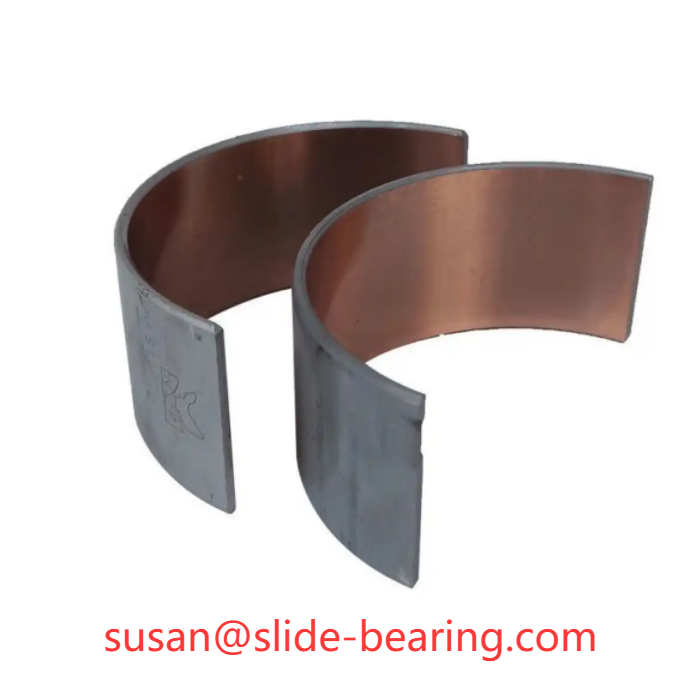
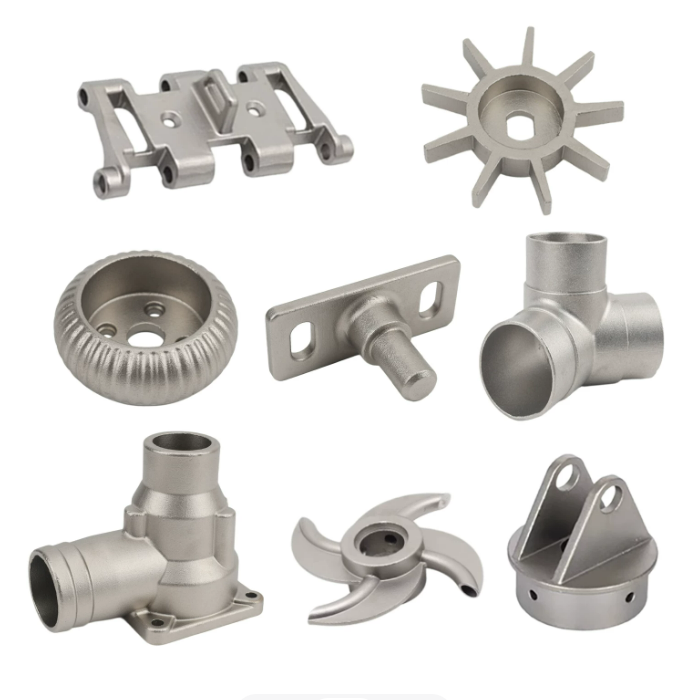
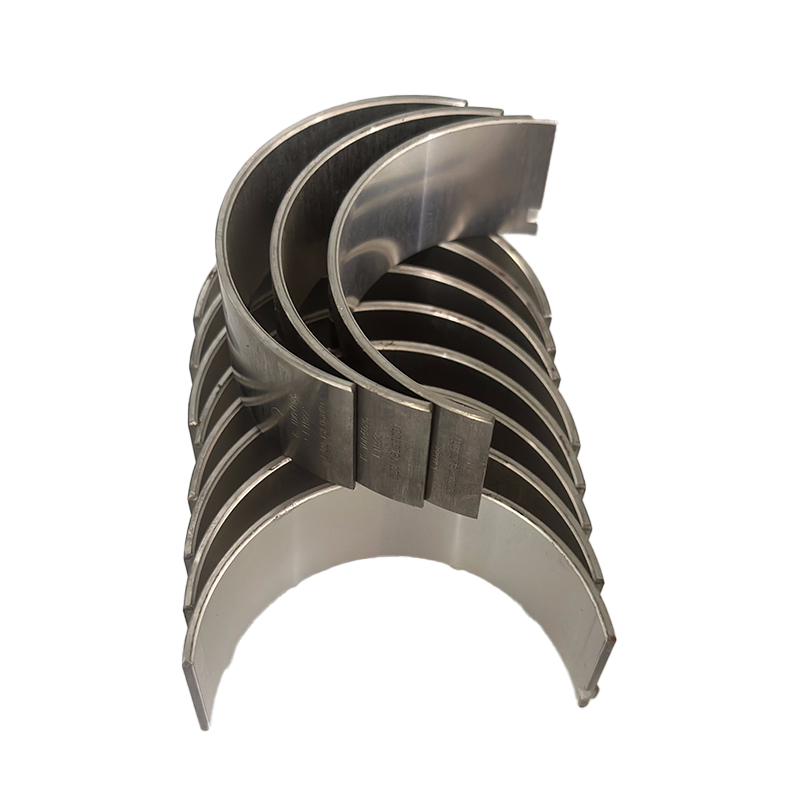
Hunan Jintai export all various of slide bearings and slide pads with high quality and best price. material can be steel,bronze,PTFE,POM ,bronze+Graphite ect. widely using for car accessories,harvest machine,ship parts,texitle machinery ,ect. accept customized sizes according to your drawing.
Please send inquiry to email: susan@slide-bearing.com




 (Chat Online)
-connecting-rod-bearing.png)