F636903 Copper Bushing Dimensions and Applications
2026-02-25
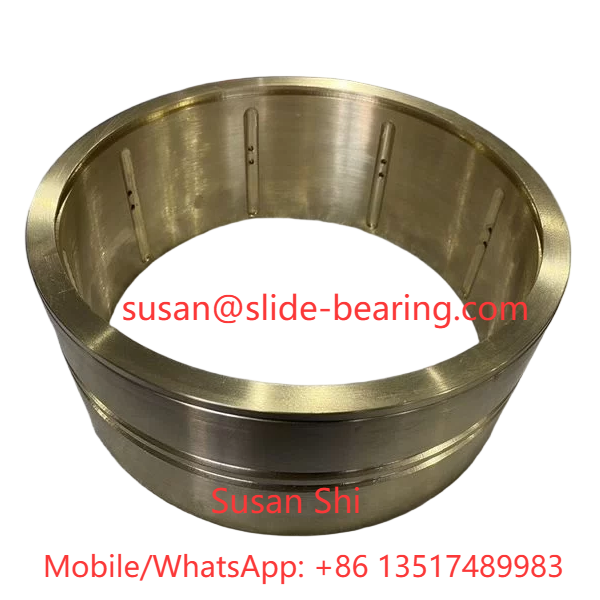
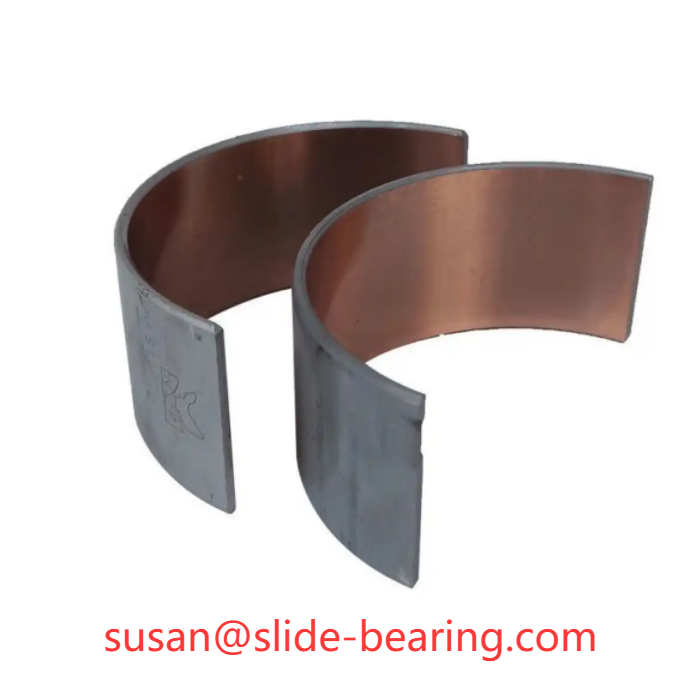
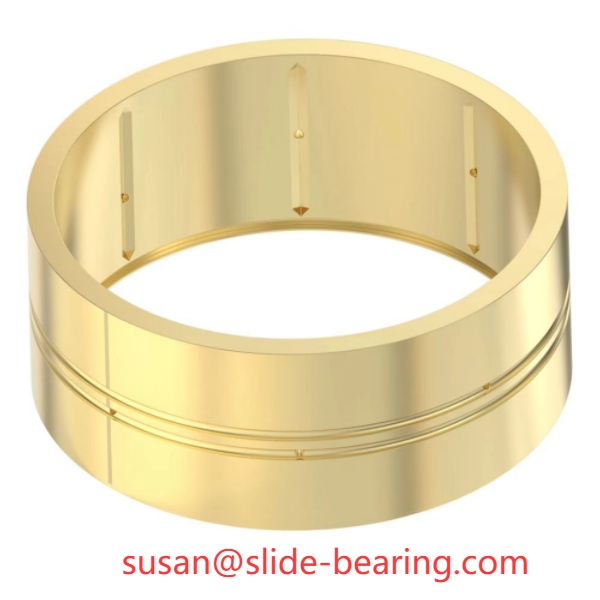
Regarding the F636903 copper bushing, here is a detailed analysis. Please note that F636903 is most likely an internal part number used by a specific equipment manufacturer (OEM), rather than a universally recognized bearing model. This means it is directly associated with a particular piece of equipment.
Based on the information you provided, I will introduce it from three aspects: dimensions, applications, and methods for accurate sourcing.
I. Regarding Dimensions: Requires Precise Matching
Since this is an internal part number, its specific dimensions are not publicly available as standard data. There are typically two reliable ways to obtain the exact dimensions:
Consult the Original Equipment Parts Manual:
If you know the brand and model of the equipment this bushing is used in, directly consult the "Parts Manual" for that equipment. Find the entry for F636903, and the manual will clearly specify all technical parameters, including its Inner Diameter, Outer Diameter, and Length.
Measure the Physical Part:
If you have the bushing on hand, the most direct method is to measure the following critical dimensions using calipers or a micrometer:
Inner Diameter
Outer Diameter
Width/Length
Whether it has features like oil grooves or oil holes.
II. Analysis of Primary Applications (Inferred)
Although there is no public data, based on the "copper bushing" category and common industrial applications, we can infer its typical uses:
|
Application Field
|
Specific Function
|
Reasoning
|
|
Construction Machinery
|
Used as a joint bushing in excavators, loaders, etc., connecting components like booms and arms to withstand high loads and shock.
|
Construction machinery is one of the largest users of non-standard, high-load copper bushings, often managed with internal part numbers.
|
|
Agricultural Machinery
|
Used in steering knuckles and suspension systems of tractors and harvesters for wear resistance and self-lubrication.
|
Agricultural machinery also widely uses non-standard copper bushings in harsh operating environments requiring high durability.
|
|
Mining Machinery
|
Serves as a shaft sleeve in crushers, conveyors, etc., enduring heavy loads and impact/abrasion from ore.
|
Mining conditions are severe; copper alloy liners/bushings are common wear parts, frequently identified by part numbers.
|
|
Hydraulics & Pneumatics
|
Used at the rod eye connections of hydraulic cylinders or as guide bushings in pumps/valves, enduring high pressure and reciprocating motion.
|
Hydraulic systems often use non-standard copper bushings to ensure precise fit and wear resistance.
|
|
General Industrial Equipment
|
Functions as a bearing support for rotating or oscillating shafts in conveyors, packaging machines, textile machinery, etc.
|
Any application requiring a low-cost, high-wear, and minimally maintained joint may use such a bushing.
|
Material Inference: Bushings of this type are typically manufactured from high-strength cast copper alloys, such as Aluminum Bronze (e.g., C95400/C95500) or Tin Bronze (e.g., C93200/C83600), providing excellent wear resistance, impact strength, and self-lubricating properties.
F636903 is a part number for a non-standard copper bushing, whose dimensions and material are solely determined by its "host equipment."




 (Chat Online)
-connecting-rod-bearing.png)